



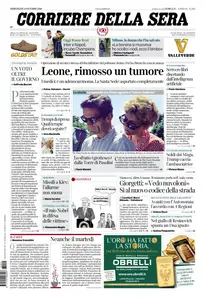

Geo France - Août 2026
French | 124 pages | PDF | 75 MB
French | 124 pages | PDF | 75 MB
| Su | Mo | Tu | We | Th | Fr | Sa |
|---|---|---|---|---|---|---|
| 30 | 31 | 1 | 2 | 3 | 4 | 5 |
| 6 | 7 | 8 | 9 | 10 | 11 | 12 |
| 13 | 14 | 15 | 16 | 17 | 18 | 19 |
| 20 | 21 | 22 | 23 | 24 | 25 | 26 |
| 27 | 28 | 29 | 30 | 1 | 2 | 3 |




The summit of Haydn’s quartet-writing, and of the classical string quartet medium itself. The ‘Emperor’, ‘Fifths’ and ‘Sunrise’ may be the best known of the six—as so often with those works by Haydn which have nicknames—but the others are every bit their equal.

This release is the last in a series of nine Josquin mass recordings by The Tallis Scholars and their director, Peter Phillips. The series began in 1986, and Phillips has been the group's director since it was founded in 1973. The Tallis Scholars are, thus, a well-oiled machine, and they're capable of a flawless vocal blend that's hard to match even among England's superb collection of small choirs (the Scholars are ten strong). There are other ways to sing Josquin, but their hyper-clarity works well in his music, for it brings out the music's striking, Bachian complexity. This particular album, despite its ultimate position, is especially good, for in the Missa Hercules Dux Ferrarie and Missa Faysant Regretz, it's best to have no distractions from the strikingly bold underlying structure.
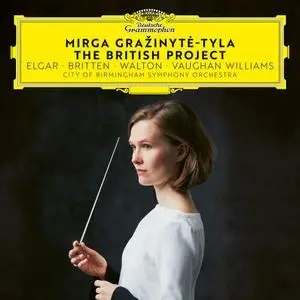
The British Project is composed of four separate performances by the City of Birmingham Symphony Orchestra and its young conductor, Mirga Gražinytė-Tyla, issued as digital-only single performances by the Deutsche Grammophon label during the pandemic and compiled into a single album in 2021. It's not clear whether the whole thing was in the performers' sights at the beginning, but it may as well have been; it's a coherent and effective program. With Elgar's lovely Sospiri, Op. 70, as a kind of preamble, Gražinytė-Tyla launches into Britten's Sinfonia da Requiem, Op. 20. This work is not exactly obscure, but it's a youthful piece much less often heard than its cousin, the War Requiem, Op. 66.