



AI for Cybersecurity: Research and Practice
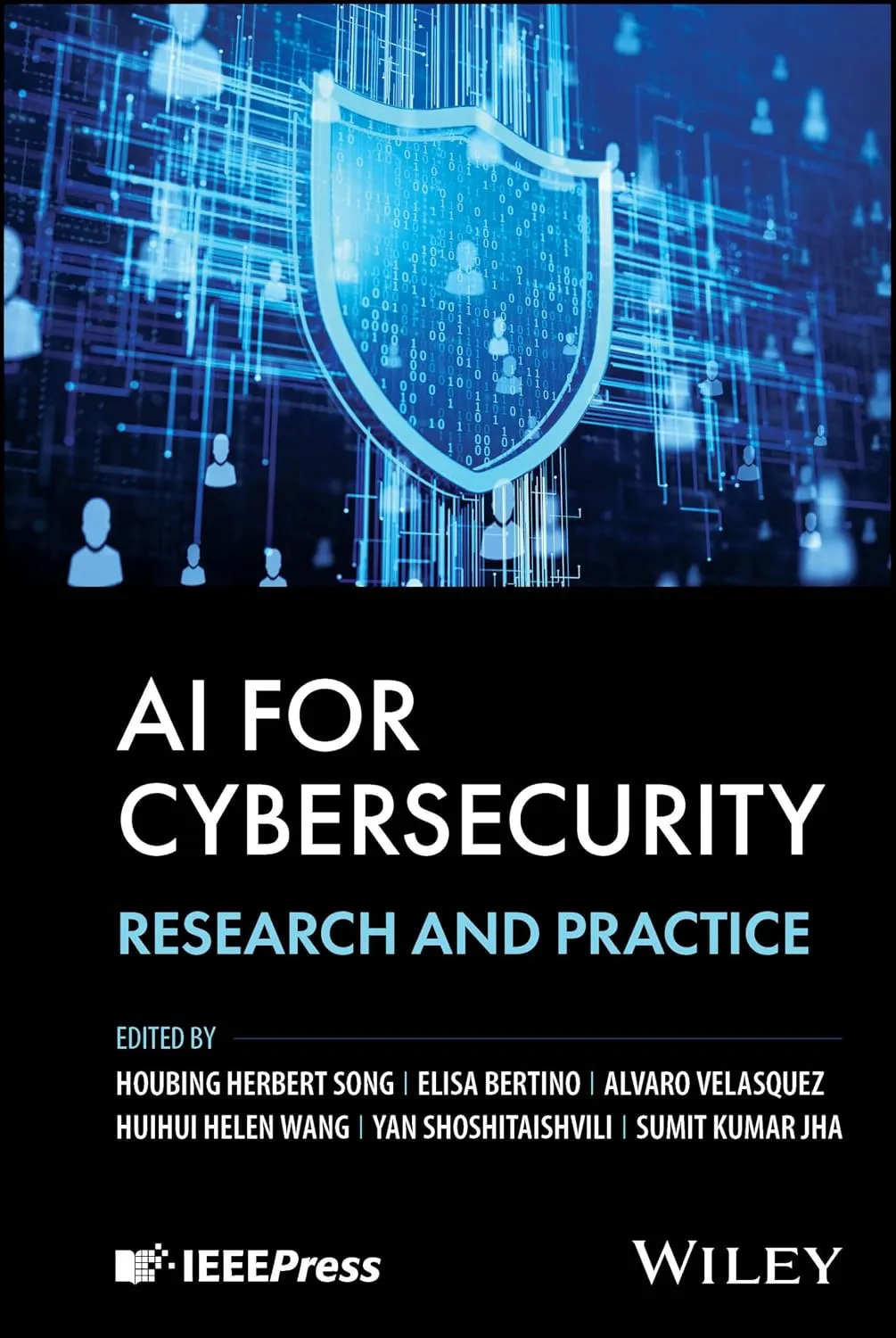
AI for Cybersecurity: Research and Practice by Houbing Herbert Song
English | January 9, 2026 | ISBN: 1394293747 | 635 pages | MOBI | 11.64 Mb
English | January 9, 2026 | ISBN: 1394293747 | 635 pages | MOBI | 11.64 Mb
Informative reference on the state of the art in cybersecurity and how to achieve a more secure cyberspace
AI for Cybersecurity presents the state of the art and practice in AI for cybersecurity with a focus on four interrelated defensive capabilities of deter, protect, detect, and respond. The book examines the fundamentals of AI for cybersecurity as a multidisciplinary subject, describes how to design, build, and operate AI technologies and strategies to achieve a more secure cyberspace, and provides why-what-how of each AI technique-cybersecurity task pair to enable researchers and practitioners to make contributions to the field of AI for cybersecurity.
This book is aligned with the National Science and Technology Council’s (NSTC) 2023 Federal Cybersecurity Research and Development Strategic Plan (RDSP) and President Biden’s Executive Order on the Safe, Secure, and Trustworthy Development and Use of Artificial Intelligence. Learning objectives and 200 illustrations are included throughout the text.
Written by a team of highly qualified experts in the field, AI for Cybersecurity discusses topics including: Robustness and risks of the methods covered, including adversarial ML threats in model training, deployment, and reuse
Privacy risks including model inversion, membership inference, attribute inference, re-identification, and deanonymization
Forensic and formal methods for analyzing, auditing, and verifying security- and privacy-related aspects of AI components
Use of generative AI systems for improving security and the risks of generative AI systems to security
Transparency and interpretability/explainability of models and algorithms and associated issues of fairness and bias
AI for Cybersecurity is an excellent reference for practitioners in AI for cybersecurity related industries such as commerce, education, energy, financial services, healthcare, manufacturing, and defense. Fourth year undergraduates and postgraduates in computer science and related programs of study will also find it valuable.