


Tags
Language
Tags
October 2026
Su Mo Tu We Th Fr Sa
27 28 29 30 1 2 3
4 5 6 7 8 9 10
11 12 13 14 15 16 17
18 19 20 21 22 23 24
25 26 27 28 29 30 31
    Attention❗ To save your time, in order to download anything on this site, you must be registered 👉 HERE. If you do not have a registration yet, it is better to do it right away. ✌

    ( • )( • ) ( ͡⚆ ͜ʖ ͡⚆ ) (‿ˠ‿)
    SpicyMags.xyz

    Trending now in eBooks & eLearning


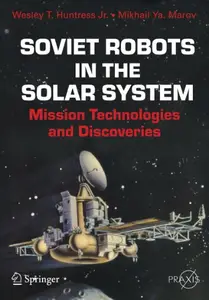
    Soviet Robots in the Solar System: Mission Technologies and Discoveries (Repost)

    Posted By: AvaxGenius
    Soviet Robots in the Solar System: Mission Technologies and Discoveries (Repost)

    Soviet Robots in the Solar System: Mission Technologies and Discoveries by Wesley T. Huntress, JR. , Mikhail Ya Marov
    English | PDF (True) | 2011 | 462 Pages | ISBN : 1441978976 | 97.2 MB

    Soviet Robots in the Solar System provides a history of the Soviet robotic lunar and planetary exploration program from its inception, with the attempted launch of a lunar impactor on September 23, 1958, to the last launch in the Russian national scientific space program in the 20th Century, Mars 96, on November 16, 1996. This title makes a unique contribution to understanding the scientific and engineering accomplishments of the Soviet Union’s robotic space exploration enterprise from its infancy to its demise with the collapse of the Soviet Union. The authors provide a comprehensive account of Soviet robotic exploration of the Solar System for both popular space enthusiasts and professionals in the field. Technical details and science results are provided and put into an historical and political perspective in a single volume for the first time. The book is divided into two parts. Part I describes the key players and the key institutions that build and operate the hardware, the rockets that provide access to space, and the spacecraft that carry out the enterprise. Part II is about putting these pieces together to enable space flight and mission campaigns. Part II is written in chronological order beginning with the first launches to the Moon. Each chapter covers a particular period when specific mission campaigns were undertaken during celestially-determined launch windows. Each chapter begins with a short overview of the flight missions that occurred during the time period and the political and historical context for the flight mission campaigns, including what the Americans were doing at the time. The bulk of each chapter is devoted to the scientific and engineering details of that flight campaign. The spacecraft and payloads are examined with as much technical detail as is available today, the progress is described, and a synopsis of the scientific result is given.
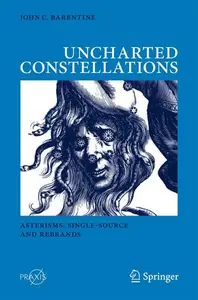
    Uncharted Constellations: Asterisms, Single-Source and Rebrands

    Posted By: AvaxGenius
    Uncharted Constellations: Asterisms, Single-Source and Rebrands

    Uncharted Constellations: Asterisms, Single-Source and Rebrands by John C. Barentine
    English | PDF(True) | 2016 | 227 Pages | ISBN : 3319276182 | 10.3 MB

    This book compiles an array of interesting constellations that fell by the wayside before the IAU established the modern canon of constellations. That decision left out lesser known ones whose history is nevertheless interesting, but at last author John Barentine is giving them their due. This book is a companion to "The Lost Constellations", highlighting the more obscure configurations.

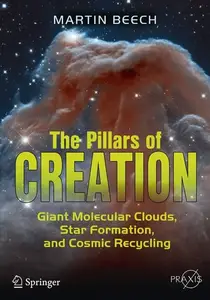
    The Pillars of Creation: Giant Molecular Clouds, Star Formation, and Cosmic Recycling (Repost)

    Posted By: AvaxGenius
    The Pillars of Creation: Giant Molecular Clouds, Star Formation, and Cosmic Recycling (Repost)

    The Pillars of Creation: Giant Molecular Clouds, Star Formation, and Cosmic Recycling by Martin Beech
    English | PDF(True) | 2017 | 279 Pages | ISBN : 3319487744 | 17.2 MB

    This book explores the mechanics of star formation, the process by which matter pulls together and creates new structures. Written for science enthusiasts, the author presents an accessible explanation of how stars are born from the interstellar medium and giant molecular clouds. Stars produce the chemicals that lead to life, and it is they that have enabled the conditions for planets to form and life to emerge.

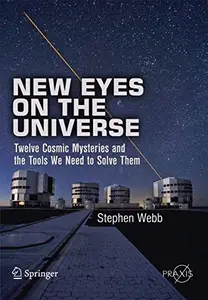
    New Eyes on the Universe: Twelve Cosmic Mysteries and the Tools We Need to Solve Them

    Posted By: AvaxGenius
    New Eyes on the Universe: Twelve Cosmic Mysteries and the Tools We Need to Solve Them

    New Eyes on the Universe: Twelve Cosmic Mysteries and the Tools We Need to Solve Them by Stephen Webb
    English | PDF | 2012 | 380 Pages | ISBN : 1461421934 | 11 MB

    This book discusses twelve areas of active astronomical research, ranging from the nature of dark energy to the existence or otherwise of extraterrestrial civilizations, and devotes one chapter to each topic. Although astronomers tackle each of these questions using information gleaned from all possible wavelengths and sources (and this is emphasized throughout the book), in this work the author dedicates each chapter to a particular observational method. One chapter covers X-ray telescopes for investigating black holes, while another uses infrared telescopes to learn more about planetary information.

    The Sky Eye: Five-Hundred-Meter Aperture Spherical Radio Telescope (FAST) (Repost)

    Posted By: AvaxGenius
    The Sky Eye: Five-Hundred-Meter Aperture Spherical Radio Telescope (FAST) (Repost)

    The Sky Eye: Five-Hundred-Meter Aperture Spherical Radio Telescope (FAST) by Rendong Nan
    English | PDF,EPUB | 2021 | 150 Pages | ISBN : 9811638233 | 107.7 MB

    This book introduces the Five-hundred-meter Aperture Spherical Radio Telescope (FAST), also known as the "The Sky Eye", one of the China’s big science facilities. Using easy-to-understand language, the book covers the scientific background, construction process, achievements, and effects of FAST on the development of the national economy. With a large number of intuitive and vivid images and videos, the book presents basic information on FAST for general readers who are interested in astronomy.

    Russian Space Probes: Scientific Discoveries and Future Missions (Repost)

    Posted By: AvaxGenius
    Russian Space Probes: Scientific Discoveries and Future Missions (Repost)

    Russian Space Probes: Scientific Discoveries and Future Missions by Brian Harvey , Olga Zakutnyaya
    English | PDF (True) | 2011 | 541 Pages | ISBN : 1441981497 | 166.6 MB

    Brian Harvey recounts for the first time the definitive history of scientific Russian space probes and the knowledge they acquired of the Earth, its environment, the Moon, Mars and Venus. He examines what Russian Space Science has actually achieved in furthering our knowledge of the Solar System, focusing on the instrumentation and scientific objectives and outcomes, the information gained and lessons learnt. Boxes and charts are used extensively in order to convey in an easily understandable manner for the non-scientific reader the problems and issues addressed and solved by Soviet space science. The book opens with the story of early space science in Russia, which started when the first Russian rockets were fired into the high atmosphere from Kapustin Yar in the late 1940s. Instruments were carried to measure and map the atmosphere and later rockets carried dogs to test their reactions to weightlessness. In order to beat America into Earth orbit, two simpler satellites than originally planned were launched, Sputnik and Sputnik 2, which provided some initial information on atmospheric density, while the following Sputnik 3 carried twelve instruments to measure radiation belts, solar radiation, the density of the atmosphere and the Earth’s magnetic field. The author recounts how, by the 1960s, the Soviet Union had developed a program of investigation of near-Earth space using satellites within the Cosmos program, in particular the DS (Dnepropetrovsky Sputnik), small satellites developed to investigate meteoroids, radiation, the magnetic fields, the upper atmosphere, solar activity, ionosphere, charged particles, cosmic rays and geophysics. Brian Harvey then gives the scientific results from Russian lunar exploration, starting with the discovery of the solar wind by the First Cosmic Ship and the initial mapping of the lunar far side by the Automatic Interplanetary Station. He describes Luna 10, which made the first full study of the lunar environment, Luna 16 which brought soil back to Earth and the two Moon rovers which travelled 50 kms across the lunar surface taking thousands of measurements, soil analyses and photographs, as well as profiles of discrete areas. Chapters 4 and 5 describe in detail the scientific outcomes of the missions to Venus and Mars, before considering the orbiting space stations in Chapter 6. Space science formed an important part of the early manned space program, the prime focus being the human reaction to weightlessness, how long people could stay in orbit and the effects on the body, as well as radiation exposure. Chapter 7 looks at the later stage of Soviet and Russian space science, including Astron and Granat, the two observatories of the 1980s, and Bion, the space biology program which flew monkeys and other animals into orbit. The final chapter looks forward to a new period of Russian space science with the Spektr series of observatories and a range smaller science satellites under the Federal Space Plan 2006-2015.

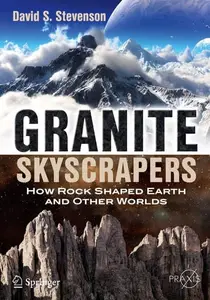
    Granite Skyscrapers: How Rock Shaped Earth and Other Worlds (Repost)

    Posted By: AvaxGenius
    Granite Skyscrapers: How Rock Shaped Earth and Other Worlds (Repost)

    Granite Skyscrapers: How Rock Shaped Earth and Other Worlds by David S. Stevenson
    English | PDF(True) | 2018 | 386 Pages | ISBN : 3319915029 | 13.6 MB

    In this book, David Stevenson offers us a look at the evolution of planets as they move from balls of mixed molten rock to vibrant worlds capable of hosting life. Embedded in our everyday architecture and in the literal ground beneath our feet, granite and its kin lie at the heart of many features of the Earth that we take for granted. From volcanism and mountain building to shifting water levels and local weather patterns, these rocks are closely intertwined with the complex processes that continue to shape and reshape our world.

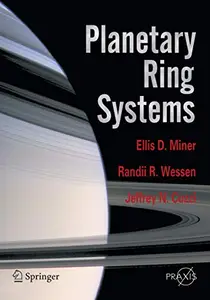
    Planetary Ring Systems

    Posted By: AvaxGenius
    Planetary Ring Systems

    Planetary Ring Systems by Ellis D. Miner , Randii R. Wessen , Jeffrey N. Cuzzi
    English | PDF(True) | 2007 | 248 Pages | ISBN : 0387341773 | 7.4 MB

    Miner and Wessen have teamed together again, along with noted planetary ring scientist, Dr Jeffrey Cuzzi, to produce the most comprehensive and up-to date book on the topic of planetary rings systems yet written. The book is written in a style and at a language level easily accessible to the interested non-expert. The authors cover the scientific significance of ring studies, the history of their discovery and characterization, the observations of Pioneer 10 at Jupiter, Pioneer 11 and Voyager 1 at Jupiter and Saturn, Voyager 2 at all four giant planets of the solar system, and Galileo at Jupiter. The discussion also includes subsequent scientific analyses of the observations, along with the accompanying theoretical studies, including various theories for the origins of planetary ring systems. Finally, the four ring systems are both compared and contrasted in a chapter on comparative planetology.

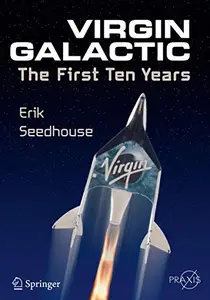
    Virgin Galactic: The First Ten Years

    Posted By: AvaxGenius
    Virgin Galactic: The First Ten Years

    Virgin Galactic: The First Ten Years by Erik Seedhouse
    English | PDF (True) | 2015 | 219 Pages | ISBN : 3319092618 | 12.2 MB

    Thirty years ago when Sir Richard Branson called up Boeing and asked if they had a spare 747, few would have predicted the brash entrepreneur would so radically transform the placid business of air travel. But today, Branson flies airlines on six continents, employs hundreds of jets and, in 2014, was predicting that his spaceship company – Virgin Galactic – would soon open the space frontier to commercial astronauts, payload specialists, scientists and space tourists. With more than 600 seats sold at $250,000 each, what started off as a dream to send people just for the excitement to look back and marvel at Earth, was on the cusp of finally being turned into a business.

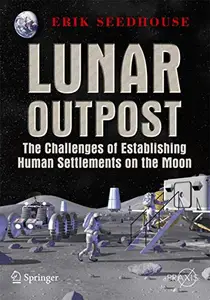
    Lunar Outpost: The Challenges of Establishing a Human Settlement on the Moon

    Posted By: AvaxGenius
    Lunar Outpost: The Challenges of Establishing a Human Settlement on the Moon

    Lunar Outpost: The Challenges of Establishing a Human Settlement on the Moon by Erik Seedhouse
    English | PDF | 2009 | 319 Pages | ISBN : 0387097465 | 4.2 MB

    Lunar Outpost provides a detailed account of the various technologies, mission architectures, medical requirements and training needed to return humans to the Moon within the next decade. It focuses on the means by which a lunar outpost will be constructed and also addresses major topics such as the cost of the enterprise and the roles played by private companies and individual countries. The return of humans to the surface of the Moon will be critical to the exploration of the solar system. The various missions are not only in pursuit of scientific knowledge, but also looking to extend human civilization, economic expansion, and public engagement beyond Earth. As well as NASA, China’s Project 921, Japan’s Aerospace Exploration Agency, Russia, and the European Space Agency are all planning manned missions to the Moon and, eventually, to Mars. The Ares-I and Ares-V are the biggest rockets since the Saturn V and there is much state-of-the-art technology incorporated into the design of Orion, the spacecraft that will carry a crew of four astronauts to the Moon. Lunar Outpost also describes the human factors, communications, exploration activities, and life support constraints of the missions.

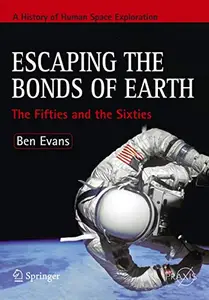
    Escaping the Bonds of Earth: The Fifties and the Sixties

    Posted By: AvaxGenius
    Escaping the Bonds of Earth: The Fifties and the Sixties

    Escaping the Bonds of Earth: The Fifties and the Sixties by Ben Evans
    English | PDF(True) | 2009 | 504 Pages | ISBN : 0387790934 | 16 MB

    To commemorate the momentous 50th anniversary of Yuri Gagarin’s pioneering journey into space on 12th April 2011, a series of five books – to be published annually – will explore this half century, decade by decade, to discover how humanity’s knowledge of flying, working and living in space has changed. Each volume will focus not only upon the individual missions within ‘its’ decade, but also upon the key challenges facing human space exploration at specific points within those 50 years: from the simple problems of breathing and eating in space to the challenges of venturing outside in a pressurised spacesuit and locomotion on the Moon.

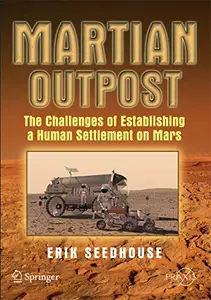
    Martian Outpost: The Challenges of Establishing a Human Settlement on Mars

    Posted By: AvaxGenius
    Martian Outpost: The Challenges of Establishing a Human Settlement on Mars

    Martian Outpost: The Challenges of Establishing a Human Settlement on Mars by Erik Seedhouse
    English | PDF(True) | 2009 | 321 Pages | ISBN : 038798190X | 17.5 MB

    Mars Outpost provides a detailed insight into the various technologies, mission architectures, medical requirements, and training needed to send humans to Mars. It focuses on mission objectives and benefits, and the risks and complexities that are compounded when linked to an overall planet exploration program involving several expeditions and setting up a permanent presence on the surface.

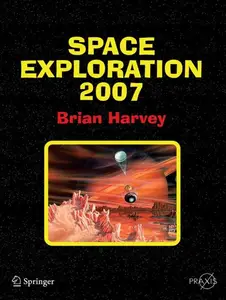
    Space Exploration 2007

    Posted By: AvaxGenius
    Space Exploration 2007

    Space Exploration 2007 by Brian Harvey
    English | PDF (True) | 2007 | 170 Pages | ISBN : 0387487581 | 15.5 MB

    The aim of the Space Exploration - 2007 is to provide an annual update on recent space launches, missions and results, to be published every year in September. The annual will cover space exploration from a variety of angles: looking back at past missions, reviewing those currently under way and looking to those planned for the future. The ten invited contributions each year will cover a variety of topics within these areas, to appeal to a wide readership.

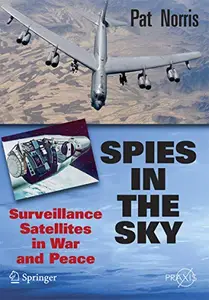
    Spies in the Sky: Surveillance Satellites in War and Peace

    Posted By: AvaxGenius
    Spies in the Sky: Surveillance Satellites in War and Peace

    Spies in the Sky: Surveillance Satellites in War and Peace by Pat Norris
    English | PDF (True) | 2008 | 225 Pages | ISBN : 0387716726 | 13.4 MB

    In Spies in the Sky Patrick Norris responds to the occasion of the 50th Anniversary of the dawn of the Space Age – the launch of Sputnik 1 – with a review of the most important historical applications of space science for the benefit of the human race during that half century, focusing particularly on the prevention of nuclear war. The author addresses the oft quoted conclusion that the Moon landings and the ‘race to the Moon’ between the two superpowers were a side effect of the Cold War, by describing what he believes was the more important event – the use of satellites by military to prevent the Cold War becoming a ‘hot war’. In developing the story the author casts a spotlight on a little-known aspect of the Space Age, namely the military dimension. Today military satellites represent 25 percent of all satellites in orbit, and they are just as important now in preventing regional nuclear war as they were in preventing global Armageddon more than 30 years ago.

    Soviet Robots in the Solar System: Mission Technologies and Discoveries (Repost)

    Posted By: AvaxGenius
    Soviet Robots in the Solar System: Mission Technologies and Discoveries (Repost)

    Soviet Robots in the Solar System: Mission Technologies and Discoveries by Wesley T. Huntress, JR. , Mikhail Ya Marov
    English | PDF (True) | 2011 | 462 Pages | ISBN : 1441978976 | 97.2 MB

    Soviet Robots in the Solar System provides a history of the Soviet robotic lunar and planetary exploration program from its inception, with the attempted launch of a lunar impactor on September 23, 1958, to the last launch in the Russian national scientific space program in the 20th Century, Mars 96, on November 16, 1996. This title makes a unique contribution to understanding the scientific and engineering accomplishments of the Soviet Union’s robotic space exploration enterprise from its infancy to its demise with the collapse of the Soviet Union. The authors provide a comprehensive account of Soviet robotic exploration of the Solar System for both popular space enthusiasts and professionals in the field. Technical details and science results are provided and put into an historical and political perspective in a single volume for the first time. The book is divided into two parts. Part I describes the key players and the key institutions that build and operate the hardware, the rockets that provide access to space, and the spacecraft that carry out the enterprise. Part II is about putting these pieces together to enable space flight and mission campaigns. Part II is written in chronological order beginning with the first launches to the Moon. Each chapter covers a particular period when specific mission campaigns were undertaken during celestially-determined launch windows. Each chapter begins with a short overview of the flight missions that occurred during the time period and the political and historical context for the flight mission campaigns, including what the Americans were doing at the time. The bulk of each chapter is devoted to the scientific and engineering details of that flight campaign. The spacecraft and payloads are examined with as much technical detail as is available today, the progress is described, and a synopsis of the scientific result is given.